
Commercial Interior Design Vancouver: Designing Spaces That Support Staff, Not Just Customers
Design doesn’t stop at what customers see. The most effective spaces support the people using them every day, improving workflow, reducing friction, and strengthening performance.
.jpg)
In commercial interior design in Vancouver, the focus has traditionally leaned toward creating spaces that impress; environments that attract customers, communicate brand identity, and deliver a strong first impression. While these elements remain essential, they often overshadow a critical factor in long-term success: how well a space supports the people who use it every single day.
Across hospitality, retail, and workplace environments, staff experience plays a direct role in efficiency, retention, and overall performance. Yet many interiors continue to prioritize front-facing aesthetics over the operational realities behind them. As expectations evolve, a more balanced approach is emerging - one that recognizes that designing for staff is not separate from designing for customers, but fundamental to it.
Why Staff-Centered Design Is Often Overlooked
In many projects, the design brief is driven by brand expression and customer experience. These priorities shape everything from material selections to spatial layout, often leaving staff needs to be addressed later in the process, or reduced to purely functional considerations.
This imbalance is not always intentional. It often stems from short-term thinking, where immediate visual impact is prioritized over long-term performance. Developers may focus on marketability, while operators inherit the day-to-day realities of a space that doesn’t fully support their teams.
Over time, these oversights become tangible. Inefficient workflows, staff fatigue, and higher turnover rates all carry real costs. Within commercial interior design, addressing these challenges early in the design process allows for spaces that are not only visually compelling, but operationally resilient.
Back-of-House Design That Improves Efficiency
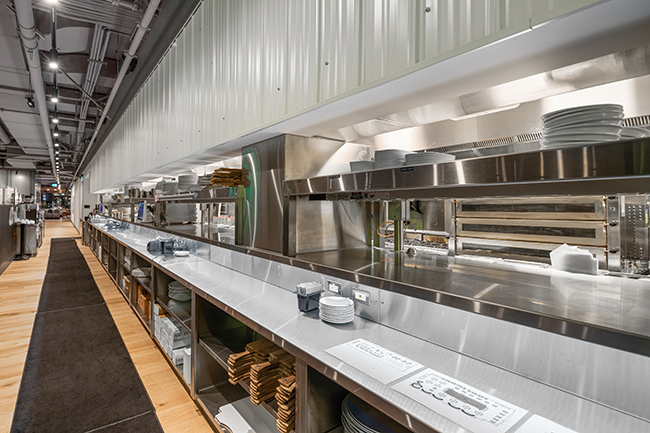
In hospitality environments, the success of a restaurant is shaped just as much by what happens behind the scenes as what guests experience in the dining room. Back-of-house areas such as kitchens, storage zones, and service corridors are where efficiency is either supported or compromised.
Poorly planned layouts can result in unnecessary movement, bottlenecks, and delays in service. When staff are forced to navigate tight or illogical pathways, even simple tasks take longer, increasing stress and reducing overall productivity. These restaurant interior design mistakes can lead to frustrated employees and even be harmful to revenue.
Thoughtful design considers adjacency and flow. Storage is positioned where it is needed most, circulation paths are kept clear, and transitions between kitchen and service areas are seamless. These decisions may not be visible to guests, but their impact is immediate and measurable.
This is where the expertise of an experienced interior design consultant becomes critical. By understanding how staff interact with a space throughout a full service cycle, design can be aligned with real operational needs supporting both speed and consistency.
Workplace Layouts That Support Focus and Flexibility
In office and corporate environments, staff needs have shifted significantly in recent years. The expectation is no longer for a single, uniform workspace, but for environments that support a range of tasks from focused individual work to collaboration and informal interaction.
Rigid layouts that rely solely on open-plan concepts often fall short. While they may encourage communication, they can also introduce distractions and reduce productivity. Conversely, overly segmented spaces can limit collaboration and adaptability.
Effective workplace design introduces a balance. Quiet zones, collaborative areas, and transitional spaces are thoughtfully integrated, allowing staff to choose environments that suit their tasks. Flexibility becomes a defining feature, enabling spaces to evolve alongside changing work patterns.
For teams specializing in Vancouver office interior design, this shift represents an opportunity to create environments that are not only functional, but responsive, supporting both individual performance and collective engagement.
.jpg)
Retail and Customer-Facing Spaces That Also Work for Staff
Retail environments are often designed with a strong emphasis on customer experience; how products are displayed, how the space flows, and how the brand is perceived. Yet staff are the ones who interact with these environments continuously, and their experience directly influences how effectively the space operates.
Poor placement of point-of-sale systems, limited storage, and inefficient restocking pathways can create friction throughout the day. Staff may spend unnecessary time navigating the space, retrieving inventory, or managing clutter, all of which detract from their ability to engage with customers.
Designing retail spaces that support staff does not mean compromising the customer experience. In fact, the two are closely linked. When staff can move efficiently, access what they need quickly, and maintain a well-organized environment, the result is a smoother, more seamless experience for everyone involved.
.jpg)
Break Areas That Allow Staff to Recharge
Break areas are often treated as secondary spaces, allocated from whatever square footage remains after primary functions have been addressed. As a result, they can feel disconnected, undersized, or lacking in comfort.
Yet for staff working long or demanding shifts, these spaces play a vital role. They provide an opportunity to step away, reset, and return to work with renewed focus. When designed thoughtfully, break areas contribute to overall well-being, morale, and retention.
Effective break spaces are intentionally separated from active work zones, offering a sense of pause rather than extension. Access to natural light, comfortable seating, and a considered material palette can transform these areas from purely functional to genuinely restorative.
Designing for Well-Being, Not Just Productivity
Supporting staff goes beyond efficiency, it extends to how a space feels over time. Elements such as lighting, ergonomics, and materiality all contribute to the physical and psychological experience of a workplace.
Natural light, where possible, has a measurable impact on mood and energy levels. Ergonomic considerations reduce physical strain, particularly in environments where staff are on their feet for extended periods. Even material choices - textures, finishes, and acoustics - shape how comfortable and sustainable a space feels throughout the day.
These factors are often subtle, but their effects are cumulative. Over time, they influence how staff engage with their environment, how they perform, and how they perceive their workplace.
.jpg)
When Staff Experience Improves Customer Experience
Designing for staff is not a separate objective from designing for customers, it is deeply interconnected. When staff are supported by their environment, the benefits extend outward.
Efficient layouts lead to smoother service. Reduced friction allows for greater focus and attentiveness. Comfortable, well-considered environments contribute to higher morale, which in turn shapes how staff interact with guests.
Customers may not consciously identify these factors, but they experience the results. Service feels more fluid, spaces feel more organized, and the overall atmosphere becomes more cohesive.
Within commercial interior design in Vancouver, this connection is becoming increasingly recognized. The most successful spaces are those where every layer, visible and invisible, works together to support a unified experience.
Designing for the People Behind the Experience
At its core, effective Vancouver interior design is about understanding how people use a space, not just how it appears. While customer-facing elements will always play a central role, they should not come at the expense of the individuals who sustain daily operations.
Designing with staff in mind requires a more integrated approach. One that considers workflow, well-being, and long-term functionality alongside visual impact. It is a shift from designing for impression to designing for performance.
For businesses operating in a competitive and design-conscious market, working with a Vancouver interior design company that understands this balance can make a meaningful difference. With the guidance of an experienced interior design consultant, spaces can be shaped to support both the people behind the scenes and those they serve.
If you’re planning a new space or rethinking an existing one, connect with our team to explore how thoughtful design can better support your staff and elevate the overall experience, or explore our other journal entries for more insights on designing high-performing commercial environments.
.jpeg)
.jpeg)
.jpeg)