
Restaurant Interior Design: The Psychology Behind Great Dining Experiences
Restaurant design shapes more than how a space looks. From lighting and layout to materials, acoustics and atmosphere, thoughtful design can influence how guests experience a restaurant from the moment they walk through the door.

Header Image Photo: Top of Vancouver | Design by JDG | Photo by Leading Lines Studios
A great restaurant experience is about more than what’s on the plate. From the moment guests walk through the door, they are responding to the space around them, often without consciously realizing it. Restaurant interior design can influence how a space feels, how guests move through it, what they notice, how comfortable they are, and even how they perceive the overall experience.
That doesn't mean great design can make up for poor food or service – it can't – but when the food, service, brand, and environment are working together, thoughtful design becomes an important part of the experience, and an opportunity to create something guests remember.
At JDG, this is one of the reasons we don't believe restaurant design should follow a formula. The right design depends on what the restaurant is trying to accomplish.
Start With the Experience You Want to Create
Before choosing a colour palette or selecting a light fixture, ask a more important question: What do you want your guests to experience?
Research into restaurant environments has found that elements such as aesthetics, ambience, lighting, layout, and other physical characteristics can influence customer perceptions and behavioural intentions.
This is where restaurant interior design becomes more than decoration. Every decision should support the experience the business is trying to create.
JDG's work with OEB Breakfast Co. is a good example. Across multiple locations, the designs maintain OEB's recognizable personality while adapting to the character of each site. Bold colours, distinctive lighting, varied seating, and location-specific details create an energetic environment appropriate for a breakfast and brunch experience without making every restaurant identical.
By comparison, JDG's work with Tap & Barrel takes a different approach. The Willowbrook location uses a central bar as a social hub, while the layout connects the dining room, lounge, and covered patio. At the Brentwood location, multiple levels, bars, a lounge, dining areas, and a rooftop patio create a much larger environment designed around gathering and social connection.
The point isn't that one approach is better than the other. The design is responding to the desired experience.
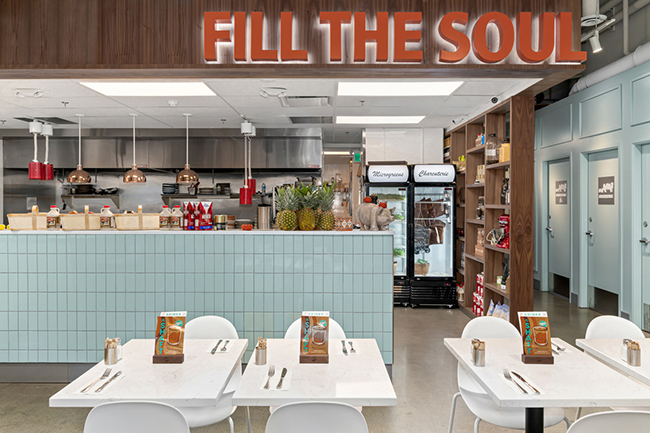
First Impressions Start Before the First Bite
A guest begins forming an impression of a restaurant before the food arrives and often before they sit down.
The entrance, storefront, host stand, sightlines, lighting, colours, materials, and even the way the dining room reveals itself can communicate something about the restaurant. Is it casual or formal? Energetic or relaxed? Familiar or unexpected? Contemporary or rooted in tradition? These impressions help establish expectations.
For a restaurant owner, that means the physical environment should align with the experience promised by the brand. If the design suggests one kind of experience while the menu and service deliver another, the guest can be left with a sense that something doesn't quite fit.
Research into restaurant environments supports the importance of this first impression. Studies have found that facility aesthetics and lighting can affect customers' perceptions of their experience, with physical-environment factors contributing to satisfaction and loyalty.
Good commercial interior design doesn't have to announce itself loudly. Sometimes the most effective spaces simply make the restaurant feel like exactly what it is supposed to be.
Colour and Materials Communicate Without Words
Colour is one of the most obvious psychological tools in interior design, but restaurant colour psychology is more nuanced than assigning a particular emotion to every colour. A successful palette considers the restaurant's brand, menu, audience, architecture, lighting, and desired atmosphere. Materials work in much the same way: warm wood, polished stone, soft textiles, pattern, texture, and scale all contribute to how a space is perceived.
Research into restaurant environments has found that interior materials can communicate symbolic cues about the character of a restaurant, while different combinations of materials contribute to different sensory environments.
JDG's work with Field & Social demonstrates this relationship between brand and materiality. Natural marble, warm wood, concrete, textured tile, and other raw materials reinforce the brand's emphasis on fresh ingredients and transparency. At the Mount Pleasant location, an expansive window provides a view into the kitchen, making that sense of transparency literal as well as visual.
The materials aren't simply there because they look good. They help tell the story.

Lighting Sets the Mood
Lighting can dramatically change the way a restaurant is perceived.
Bright, even lighting can contribute to a fresh, energetic environment. Lower, warmer lighting can create intimacy. Accent lighting can draw attention to architectural features, artwork, or a bar, while natural light can make a space feel open and connected to its surroundings.
The right strategy depends on what the restaurant wants to accomplish.
For a breakfast concept such as OEB, an energetic and welcoming environment makes sense. At its North Vancouver location, for example, high ceilings and lighting contribute to an open, welcoming atmosphere, while a dramatic blue bar and custom wallpaper provide visual energy.
Lighting also works alongside every other element in the room. The same material can look completely different under different lighting conditions, which is why lighting should be considered as part of the overall design rather than treated as an item to select at the end.
Layout Influences Movement and Interaction
A restaurant's layout quietly directs people.
Where do guests enter? What do they see first? How do they find the host stand? How easily can staff move through the space? Which tables feel private or social? Is the bar part of the action or tucked away? These decisions affect both the guest experience and the operational efficiency of the restaurant.
JDG's Field & Social Dunsmuir project, for example, was designed with particular attention to crowd flow and staff efficiency within a century-old building. The result balances an open, airy atmosphere with the practical requirements of a busy restaurant.
At Kavita, the layout serves a different purpose. Curved forms, mirrors, layered materials, and carefully considered sightlines create movement and discovery within a relatively compact 1,500-square-foot space. The open kitchen places the chefs and the activity of preparing the food directly within the dining experience.
In both cases, the layout is doing more than fitting tables into a floor plan. It is shaping how people experience the restaurant.
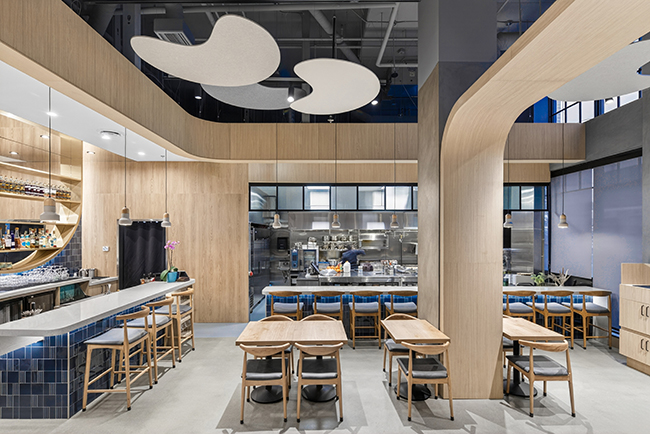
Acoustics Are Part of the Atmosphere
Sound is one of the easiest aspects of restaurant design to overlook, and one of the easiest to notice when it isn't working.
A restaurant can look beautiful and still be uncomfortable if guests have difficulty hearing one another. On the other hand, a completely quiet dining room isn't necessarily the goal either. Some restaurants want a lively, energetic atmosphere.
The right acoustic environment depends on the restaurant.
Research into restaurant soundscapes has found relationships between acoustic conditions, interior materials, perceived atmosphere, and the overall quality of the dining environment. Researchers have also identified a balance between acoustic comfort and the lively atmosphere some restaurants are intentionally trying to create.
JDG has incorporated acoustic considerations directly into restaurant design, including the use of design elements that contribute to both the visual identity and acoustic performance of a space. One specific example of this would be the egg-shaped acoustic panels used to reduce the echo at OEB Breakfast in Victoria. This approach met the acoustic needs while simultaneously providing an on-brand, visually compelling design element.
This is a good example of why restaurant interior design needs to consider all the senses. A ceiling feature, wall treatment, upholstery, or other finish may contribute to the aesthetic, but it can also affect how the room sounds.
Design Can Support the Pace of the Restaurant
Not every restaurant wants guests to have the same kind of visit.
A fast-casual restaurant may need efficient circulation, easy-to-understand ordering, durable finishes, and seating that supports a higher volume of guests. A fine-dining restaurant may prioritize privacy, comfort, atmosphere, and a slower pace.
Environmental psychology research has specifically examined how physical environments can support high-volume restaurants, including the relationship between stimulation, seating, lighting, music, and table turnover.
That doesn't mean there is a secret design formula for making guests leave faster or stay longer. Rather, the physical environment can support the pace the business is designed to deliver creating an experience that feels natural to the guest.
Brand Consistency Doesn't Mean Identical Restaurants
For restaurant groups with multiple locations, design has another psychological role: recognition. A guest should be able to walk into a new location and recognize the brand, even if the restaurant doesn't look exactly like the last one they visited.
Tap & Barrel and OEB Breakfast both demonstrate this principle well. JDG has worked on multiple locations, with each responding to its own site while maintaining the broader brand experience.
This balance is important. A brand needs consistency to build recognition, but a restaurant also needs to feel connected to its community and customers.
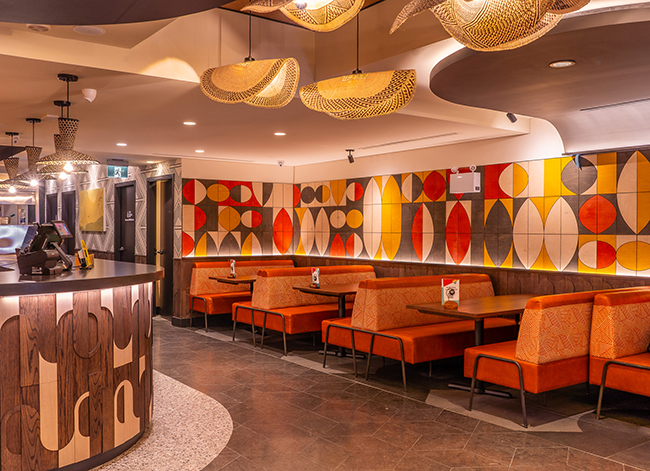
Great Design Supports Great Food
It's important not to give design more credit than it deserves. A beautiful restaurant cannot compensate for poor food, poor service, or a poorly run operation. Guests ultimately come for the complete experience, and the food remains at the centre of a restaurant's offering.
But the reverse is also worth considering: great food deserves an environment that supports it.
Research has found relationships between restaurant atmospherics, customer satisfaction, and behavioral intentions such as returning or recommending a restaurant. The physical environment helps establish expectations, reinforce the brand, create comfort, and frame the food and service experience. That is why JDG approaches restaurant design as a complete experience rather than a collection of finishes.
Frequently Asked Questions About Restaurant Interior Design
How does interior design affect the restaurant experience?
Restaurant design influences the physical environment guests experience while dining, including aesthetics, lighting, layout, ambience, and acoustics. Research has found that these factors can affect perceptions of the dining experience, satisfaction, and behavioural intentions.
What makes a restaurant feel welcoming?
There isn't one design formula. A welcoming restaurant typically has a clear sense of identity, comfortable circulation and seating, appropriate lighting and acoustics, and design choices that align with the expectations created by the brand and menu.
How does restaurant layout affect customers?
Layout influences how guests enter, move through, and interact with a restaurant. It also affects staff circulation and operational efficiency. The best layout balances the practical requirements of the business with the type of guest experience the restaurant wants to create.
Why is lighting important in restaurant design?
Lighting contributes to atmosphere, visibility, comfort, and the way colours and materials are perceived. The appropriate lighting strategy depends on the restaurant's concept and the experience it wants to create.
Can restaurant design influence whether customers return?
Design is one part of the overall dining experience. Research has found relationships between restaurant atmospherics, customer satisfaction, and behavioural intentions such as returning or recommending the restaurant. However, design works alongside food, service, value, and other aspects of the experience – it isn't a substitute for them.

Designing the Experience From the Inside Out
There is no universal formula for successful restaurant design. The right colour palette depends on the brand. The right lighting depends on the atmosphere. The right seating depends on the desired pace and clientele. The right layout depends on the menu, service model, kitchen, site, and business goals. This is what makes collaborating with an interior design consultant essential.
At JDG, our food and beverage design work ranges from fast-casual concepts and breakfast restaurants to full-service dining environments and multi-location restaurant groups. Our restaurant interior design services extend from concept development and presentation through detailed drawings, permits, millwork, budgeting, tender management, project management, and onsite construction coordination.
The psychology isn't about tricks. It's about understanding people and using design to create an environment that supports the experience you want them to have.
If you're planning a new restaurant, renovating an existing space, or expanding your concept, talk to JDG about your project. We can help translate your vision, brand, and business goals into a space designed around the experience you want your guests to have.


